


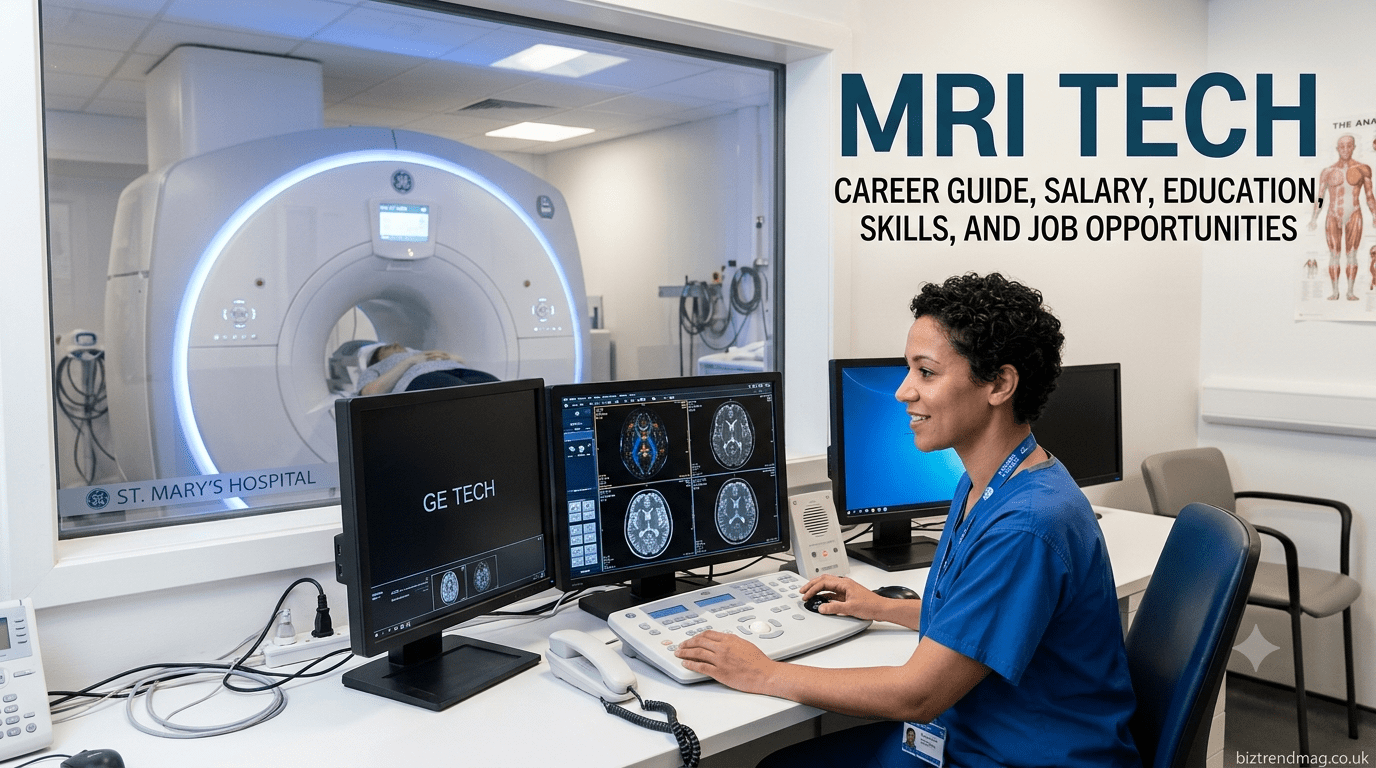
Medical imaging plays a major role in modern healthcare. One of the most important professionals in this field is an MRI tech. These specialists help doctors diagnose diseases and injuries by creating detailed images of the inside of the body. Their work supports better treatment decisions and improved patient care.
Many people are interested in becoming an MRI tech because the profession offers strong job stability, competitive salaries, and meaningful daily work. It combines healthcare, technology, and patient interaction into one rewarding career. Whether you are a student exploring career options or someone considering a healthcare profession, understanding the role of an MRI tech can help you make an informed decision.
In this guide, we will explore education requirements, daily responsibilities, salary expectations, skills, certifications, and career opportunities. You will also discover why MRI technology continues to be one of the fastest-growing healthcare careers.
What Is an MRI Tech?
An MRI tech (Magnetic Resonance Imaging Technologist) is a healthcare professional trained to operate MRI scanners. These machines use powerful magnets and radio waves to create detailed images of organs, tissues, and bones inside the body.
Doctors use MRI scans to identify injuries, tumors, neurological conditions, and many other health concerns. The MRI tech ensures that each scan is performed safely and accurately. They also explain procedures to patients, position them correctly, and monitor them throughout the imaging process.
This role requires both technical knowledge and strong communication skills. Patients may feel nervous before a scan, and the MRI technologist helps them stay comfortable and calm during the procedure.
MRI Tech Biography Table
| Category | Details |
| Career Name | MRI Tech |
| Full Title | Magnetic Resonance Imaging Technologist |
| Industry | Healthcare |
| Main Duty | Perform MRI scans and create diagnostic images |
| Education Required | Associate Degree or Certificate Program |
| Certification | ARRT MRI Certification (recommended) |
| Work Environment | Hospitals, Clinics, Imaging Centers |
| Average Work Hours | Full-Time, Shift-Based |
| Key Skills | Patient Care, Technical Skills, Attention to Detail |
| Career Growth | High Demand Nationwide |
| Job Outlook | Strong and Growing |
| Average Salary | Varies by location and experience |
What Does an MRI Tech Do Every Day?
The daily responsibilities of an MRI tech go beyond operating imaging equipment. Before a scan begins, the technologist reviews the patient’s medical history and confirms the imaging order.
They prepare patients for the procedure and ensure all safety guidelines are followed. Since MRI machines use strong magnetic fields, patients must remove metal objects before entering the scanning area.
During the examination, the MRI technologist positions the patient correctly to obtain clear images. They monitor image quality and may repeat scans if additional detail is needed. After the procedure, they organize imaging records and communicate with radiologists when necessary.
Their attention to detail directly affects diagnostic accuracy.
Education Requirements for an MRI Tech
Most MRI technologists begin by completing an accredited medical imaging or radiologic technology program. These programs are often available through community colleges, universities, and technical schools.
Students learn anatomy, patient care, imaging procedures, medical ethics, and equipment operation. Clinical training is also included, allowing students to gain hands-on experience in healthcare settings.
After graduation, many professionals pursue specialized MRI training. This additional education helps them understand MRI safety, image production, and advanced scanning techniques.
Strong educational preparation helps future MRI tech professionals enter the workforce confidently.
MRI Tech Certification and Licensing
Certification can significantly improve career opportunities. Many employers prefer candidates who hold recognized professional credentials.
One common certification is offered through the American Registry of Radiologic Technologists (ARRT). This certification demonstrates competency in MRI imaging procedures and patient care practices.
Some states may require additional licensing requirements. Candidates should always review local regulations before beginning their career path.
Certification not only increases job prospects but also demonstrates commitment to professional excellence.
Essential Skills Every MRI Tech Needs
Success as an MRI tech requires a combination of technical and interpersonal abilities. Operating sophisticated imaging equipment demands strong attention to detail and problem-solving skills.
Communication is equally important. Patients often feel anxious during MRI procedures. A friendly and supportive approach helps create a positive experience.
Other valuable skills include:
- Patient care
- Critical thinking
- Time management
- Medical knowledge
- Technical expertise
- Team collaboration
- Safety awareness
- Attention to detail
Developing these skills can help technologists perform their duties effectively and advance professionally.
MRI Tech Salary and Earnings Potential
One reason many people choose this profession is the attractive earning potential. MRI technologists generally earn competitive salaries compared to many other healthcare careers requiring similar education levels.
Income depends on several factors, including location, employer type, certifications, and years of experience. Technologists working in large hospitals or specialized imaging centers often earn higher wages.
Additional certifications and advanced imaging expertise may further increase earning potential. Some professionals also earn extra income through evening, weekend, or on-call shifts.
As healthcare services continue expanding, salary opportunities remain promising.
Work Environment of an MRI Tech
MRI technologists work in various healthcare settings. Hospitals remain the most common workplace, but many professionals also find opportunities in outpatient imaging centers and specialty clinics.
The environment is typically clean, organized, and technology-focused. Daily responsibilities involve direct patient interaction and collaboration with healthcare teams.
Because imaging services are needed around the clock, some MRI tech professionals work evenings, weekends, or overnight shifts. Flexibility can be an advantage for individuals seeking different scheduling options.
Despite occasional challenges, many technologists find the work rewarding because they contribute directly to patient diagnosis and treatment.
Benefits of Becoming an MRI Tech
There are several advantages to choosing a career as an MRI tech. One major benefit is job stability. Healthcare services continue growing, creating ongoing demand for imaging professionals.
Another advantage is meaningful work. Technologists help doctors detect serious conditions and guide treatment decisions. Knowing your work impacts patient outcomes can be highly satisfying.
Additional benefits include:
- Competitive salary
- Career growth opportunities
- Strong job demand
- Healthcare benefits
- Flexible schedules
- Professional development options
- Advanced specialization opportunities
These benefits make MRI technology an attractive healthcare career.
Challenges MRI Techs May Face
Like any profession, MRI technology comes with challenges. Some patients experience anxiety or claustrophobia during scans. Helping them remain calm requires patience and strong communication skills.
Technologists also spend long periods standing and moving patients. Physical stamina is important for handling daily tasks safely.
Technology continues evolving, requiring ongoing education and training. Staying updated with new equipment and imaging techniques is essential for long-term success.
Despite these challenges, many MRI tech professionals enjoy the dynamic and rewarding nature of their work.
Career Advancement Opportunities
An MRI tech can pursue multiple career advancement paths. With experience, technologists may move into leadership positions, such as imaging supervisor or department manager.
Some professionals expand their expertise into advanced imaging specialties. Others become educators, trainers, or healthcare administrators.
Continuing education and professional certifications often open doors to higher-level opportunities. The healthcare industry values professionals who consistently develop their knowledge and skills.
Career growth remains one of the strongest advantages of entering this field.
Future Demand for MRI Tech Professionals
Healthcare providers increasingly rely on advanced imaging technologies. As the population grows and ages, demand for diagnostic services continues rising.
MRI remains one of the most effective imaging methods for evaluating soft tissues, neurological conditions, and internal injuries. This growing reliance supports strong demand for qualified MRI tech professionals.
Medical facilities continue investing in imaging technology, creating additional employment opportunities. For individuals seeking a stable healthcare career, MRI technology offers excellent long-term prospects.
How to Start Your Journey as an MRI Tech
Starting a career as an MRI tech begins with researching accredited education programs. Choosing a quality training program provides the foundation needed for success.
Students should focus on developing both technical expertise and patient care skills. Clinical experience is especially valuable because it prepares future technologists for real-world responsibilities.
After completing education requirements, obtaining certification can strengthen employment opportunities. Building professional connections and pursuing continuous learning can further support career growth.
With dedication and proper training, becoming an MRI technologist can lead to a fulfilling and successful career.
Conclusion
An MRI tech plays a vital role in modern healthcare. These professionals combine technology, patient care, and medical knowledge to help doctors make accurate diagnoses. The career offers strong job demand, competitive salaries, advancement opportunities, and meaningful daily work.
Whether you are beginning your career journey or considering a career change, MRI technology provides an excellent path forward. With the right education, certification, and commitment to learning, you can build a rewarding future in this growing healthcare field.
FAQs
1. What does an MRI tech do?
An MRI tech operates MRI machines, prepares patients for scans, ensures safety procedures are followed, and produces diagnostic images for physicians.
2. How long does it take to become an MRI tech?
Most individuals complete an associate degree or imaging program in about two years, followed by specialized MRI training.
3. Is MRI tech a good career?
Yes. It offers strong job stability, competitive pay, career growth opportunities, and meaningful work in healthcare.
4. What skills are important for an MRI tech?
Important skills include patient care, communication, technical knowledge, attention to detail, and problem-solving abilities.
5. Do MRI techs need certification?
While requirements vary, professional certification often improves employment opportunities and career advancement.
6. Where can an MRI tech work?
MRI technologists commonly work in hospitals, outpatient imaging centers, specialty clinics, and healthcare facilities.
