



Few contemporary architects have managed to combine professional credibility with mass public appeal as effectively as George Clarke. Known across the United Kingdom and beyond for his engaging television presence and practical design philosophy has become a household name in the fields of architecture, home renovation, and urban regeneration.
While many architects work behind the scenes shaping skylines and private residences has stepped into the spotlight to make architecture understandable, inspiring, and accessible. His work spans television, writing, public speaking, and hands-on architectural practice. This in-depth article explores life, education, philosophy, career achievements, media influence, and long-term impact on modern housing conversations.
Early Life and Influences on George Clarke
George Clarke was born on May 27, 1974, in Sunderland, England. Growing up in a working-class community in the North East, he was surrounded by practical craftsmanship rather than academic theory. One of the strongest influences in his early life was his grandfather, who worked as a builder.
From a young age developed an appreciation for how buildings are constructed and how spaces function. Watching his grandfather work instilled a respect for traditional skills and hands-on knowledge. Rather than viewing architecture as an elite or abstract profession, he saw it as something grounded in real life.
This early exposure to building sites and tools shaped his career ambitions. By his teenage years, he had already decided that architecture would be his path.
Education and Architectural Training of George Clarke
pursued formal architectural education with determination. He studied architecture at Newcastle University before completing postgraduate studies at the prestigious Bartlett School of Architecture at University College London.
His academic training provided him with technical expertise, exposure to design innovation, and a deeper understanding of architectural theory. However, even while studying in London remained connected to his roots. He never lost sight of the importance of designing for real people rather than focusing solely on abstract concepts.
His education allowed him to merge creative ambition with practical sensibility—an approach that defines his work to this day.
The Early Career of George Clarke
Before becoming a television personality established himself as a practicing architect. He founded his own architectural practice, focusing primarily on residential design and small-scale development projects.
During these early years, George Clarke worked on:
- Home renovations
- Loft conversions
- Community-centered developments
- Urban housing improvements
He built a reputation for understanding both aesthetic and structural concerns. Clients appreciated his ability to balance creativity with budget realities.
Unlike architects who pursue high-profile commercial skyscrapers dedicated much of his energy to improving domestic spaces. This people-focused orientation later became central to his public image.
George Clarke’s Breakthrough in Television
George Clarke’s career took a transformative turn when he entered television. His natural communication skills and enthusiasm for design made him an ideal presenter.
He became widely recognized through Channel 4 programs such as:
- The Restoration Man
- George Clarke’s Amazing Spaces
- Old House New Home
Through these shows demonstrated his passion for architecture while educating viewers about practical design decisions. He explained structural changes, planning permissions, insulation techniques, and material choices in clear, accessible language.
Television allowed him to reach audiences far beyond the traditional architectural community.
George Clarke’s Amazing Spaces and Its Cultural Influence
Among all his programs Amazing Spaces stands out as especially influential. The show celebrates imaginative use of small or unconventional spaces, from tiny homes and converted sheds to mobile dwellings and micro apartments.
George Clarke emphasizes that thoughtful design matters more than square footage. In a time of rising housing costs and shrinking urban spaces, this message resonates deeply.
The show inspired many viewers to rethink what is possible within limited budgets and compact areas. It also helped normalize alternative housing ideas such as modular construction and eco-friendly living.
The Architectural Philosophy of George Clarke
At the heart of work is a clear and consistent philosophy: architecture should serve people.
He frequently advocates for:
- Community-focused planning
- Sustainable materials
- Energy efficiency
- Respect for historical structures
- Affordable housing solutions
believes that good design improves mental well-being and social cohesion. A thoughtfully designed home can enhance family life, productivity, and comfort.
He often criticizes poorly planned developments that prioritize profit over people. His commitment to ethical design has earned him respect within and beyond the architectural profession.
George Clarke and Urban Regeneration
Urban regeneration has been a recurring theme in career. He has consistently supported revitalizing neglected buildings rather than demolishing them.
Through The Restoration Man, he showcased ambitious projects transforming old churches, water towers, and industrial buildings into beautiful homes.
This approach aligns with sustainability goals while preserving architectural heritage. George Clarke sees restoration as a way of honoring the past while adapting to modern needs.
By highlighting these transformations on television, he has encouraged broader appreciation for conservation and adaptive reuse.
Social Impact and Advocacy of George Clarke
Beyond design aesthetics, George Clarke engages in broader conversations about housing inequality and urban development.
He has spoken publicly about the need for:
- Affordable housing initiatives
- Better urban planning
- Sustainable community growth
- Government accountability in housing policy
George Clarke understands that architecture intersects with social justice. Poor housing conditions can affect health, education, and employment opportunities.
By using his platform to discuss these issues, he elevates architecture from a design discipline to a social responsibility.
George Clarke as an Author and Educator
In addition to television and architectural practice, George Clarke has authored books focused on home improvement and creative design.
Through writing and public speaking, he continues his mission of making architecture accessible. His educational efforts target homeowners, students, and aspiring designers.
He simplifies technical jargon and emphasizes practical advice, encouraging people to feel confident about altering their living spaces.
This role as educator reinforces his reputation as a bridge between professionals and the general public.
Sustainability and Environmental Responsibility in George Clarke’s Work
Environmental responsibility is central to George Clarke’s outlook. He promotes energy-efficient homes and the use of sustainable materials.
Key themes he often addresses include:
- Insulation improvements
- Solar integration
- Passive heating systems
- Low-impact building materials
In an era of climate awareness, George Clarke’s emphasis on eco-conscious design feels timely and necessary.
He encourages homeowners to consider long-term environmental impact alongside immediate comfort.
Personal Life and Relatability of George Clarke
While George Clarke is primarily known for his professional achievements, he occasionally shares insights into his personal life. As a father and homeowner himself, he understands firsthand the importance of functional living spaces.
His relatability enhances his appeal. He does not present architecture as abstract theory but as a practical tool for improving everyday life.
This grounded approach strengthens his connection with audiences across various demographics.
The Influence of George Clarke on Public Perception of Architecture
One of George Clarke’s most significant contributions is changing how the public views architecture.
Before figures like him gained mainstream recognition, architecture was often perceived as distant or elitist. Through television, George Clarke demonstrated that design decisions affect everyone.
Homeowners now discuss open-plan layouts, natural lighting, and sustainable materials with greater awareness. His influence has empowered individuals to take more active roles in shaping their environments.
Criticism and Real-World Challenges
Despite his widespread popularity, George Clarke has faced some criticism. Viewers occasionally question the realism of renovation timelines or budgets shown on television.
However, most of these concerns relate to the nature of TV production rather than his architectural integrity. Overall, his transparency and sincerity have preserved public trust.
George Clarke’s Lasting Legacy
George Clarke’s legacy extends beyond individual projects. He has reshaped public discourse around housing, sustainability, and urban development.
His emphasis on:
- Accessibility
- Community
- Ethical design
- Practical innovation
ensures his influence will continue as housing challenges evolve.
He represents a model of how professionals can use media platforms responsibly and constructively.
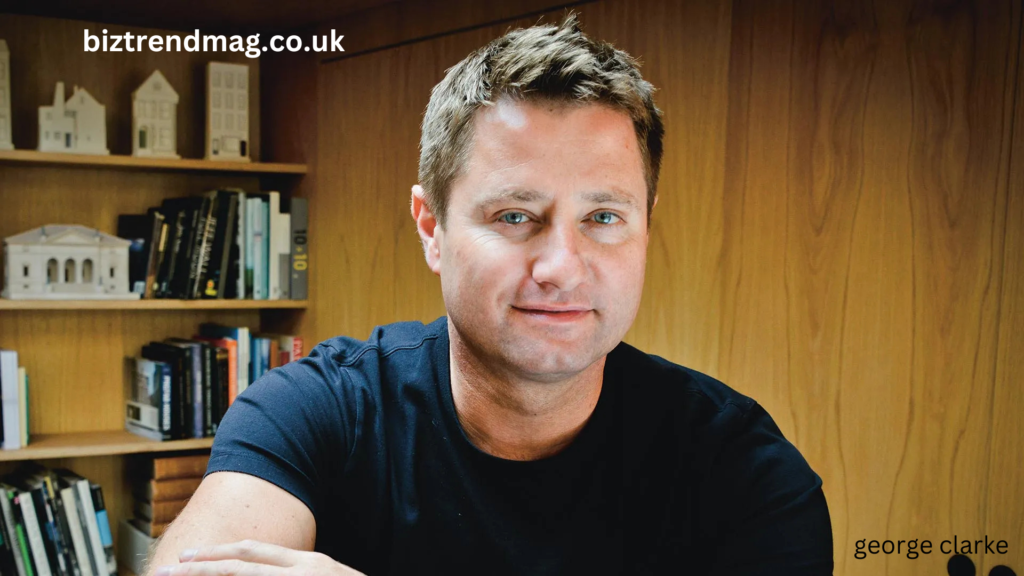
The Future of George Clarke
As housing affordability, sustainability, and urban density remain pressing global issues, George Clarke’s voice continues to be relevant.
Future endeavors may include expanded advocacy, innovative housing experiments, or new television projects exploring climate-resilient design.
Whatever direction he chooses, his guiding principles are unlikely to change: architecture must serve people.
Conclusion: Why George Clarke Matters
George Clarke stands at the intersection of architecture and public engagement. From his beginnings in Sunderland to national recognition as a trusted design authority, his journey reflects passion and purpose.
Through television, writing, and advocacy, George Clarke has demonstrated that architecture is not merely about buildings—it is about community, sustainability, and quality of life.
His work reminds us that thoughtful design can transform not only spaces but also the experiences of those who inhabit them. As conversations about housing and sustainability grow increasingly urgent, George Clarke remains a powerful advocate for accessible, responsible, and human-centered architecture.
In a rapidly changing world, his message endures: good design is not a luxury—it is a necessity.
